
Protein Intake for Fat Loss: How Much Do You Really Need?
In short: Most people need about 1.2 to 1.6 grams of protein per kg of body weight a day while losing fat, and 1.6 to 2.0 g/kg if they lift weights regularly. Spread it across all meals instead of loading it into dinner.
You have probably heard "eat more protein" everywhere. But how much is enough? Is too much harmful? Do you need protein shakes? And what if you are vegetarian? Protein matters, but knowing how to use it is what makes the difference.
Why protein matters for fat loss
When you are losing fat, you eat less than your body needs, and your body can start breaking down muscle along with fat. That is exactly what we do not want. Protein helps you:
- Preserve muscle mass
- Stay full for longer
- Reduce unnecessary cravings
- Recover if you are exercising
In simple terms, protein helps you lose fat without looking or feeling weak.
How much protein do you need?
| Your situation | Protein per kg of body weight | Example for a 70 kg person |
|---|---|---|
| Fat loss, general | 1.2 to 1.6 g | About 84 to 112 g a day |
| Fat loss with regular strength training | 1.6 to 2.0 g | About 112 to 140 g a day |
You do not need to be exact every single day, but you should land in your range consistently. If you have kidney disease or another medical condition, check with your doctor before raising your protein.
The biggest mistake: too little, and unevenly
Most people do not eat too much protein. They eat too little, and in the wrong places: a very low-protein breakfast, a moderate lunch and a heavy dinner. Your body needs protein through the day, not in one meal.
A simple fix: protein at every meal
Instead of overthinking numbers, think in meals.
| Meal | Ideas |
|---|---|
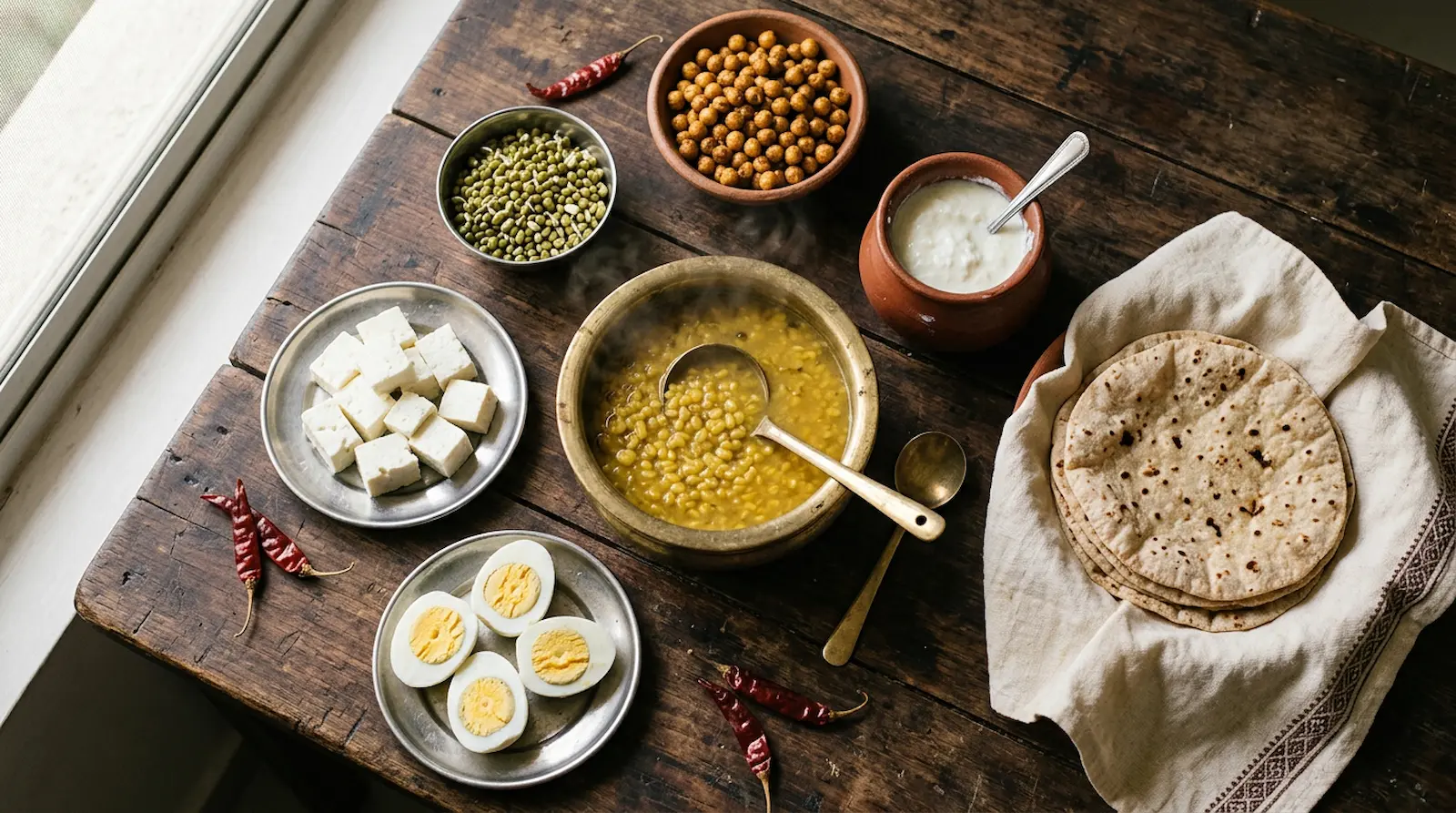
| Breakfast | Egg whites, homemade paneer from skimmed milk, low-fat Greek yogurt, sprouts |
| Lunch | Dal and roti, chicken or fish, homemade paneer or tofu |
| Snacks | Buttermilk, low-fat yogurt, roasted chana, a protein shake if needed |
| Dinner | Similar to lunch, balanced and not overly heavy |
Do you need protein powder?
Not necessarily. If you can meet your protein from food, that is perfectly fine. Powders are convenience tools, not a requirement. They can help if you have a busy schedule, struggle to reach your target from food, or work out regularly. Whey also has the advantage of being a high-quality protein that contains all the essential amino acids.
What if you are vegetarian?
It takes slightly more effort, but it is absolutely doable. Combine dal with rice, roti with paneer, tofu, soy chunks, Greek yogurt, and nuts and seeds in moderation. The key is variety and planning, not restriction.
Protein alone will not do the job
Even with perfect protein, fat loss will not happen unless your overall calories are in control, you are active, and your sleep and stress are managed. Protein supports the process. It does not replace it.
Remember: include protein in every meal, stay consistent rather than perfect, combine it with strength training, and focus on overall balance.
Next step: Not sure what your protein target should be? Book a free 15-minute discovery call using the booking icon at the top right of this page, and we will work it out around your food and routine.
Frequently Asked Questions
How much protein do I need to lose fat?
Roughly 1.2 to 1.6 grams per kg of body weight a day, and 1.6 to 2.0 g/kg if you do regular strength training. Staying in the range consistently matters more than hitting an exact number daily.
Do I need protein powder?
No. If you can meet your protein needs from food, that is fine. Powder is a convenience for busy schedules or when you struggle to reach your target.
How can vegetarians get enough protein?
Combine dal with rice, roti with paneer, tofu, soy chunks, Greek yogurt, sprouts and nuts, and include a protein source in every meal. It takes a little more planning but is very doable.
Keep Reading

Written by Neelam Attar
Neelam is a Clinical and Sports Nutritionist with over a decade of experience working with athletes, fitness enthusiasts, and clients managing medical conditions. She specializes in ergogenic aids, supplement stack optimization, and metabolic health. Based in Mumbai, serving globally.